Jamaica's First High-Powered Rocketry Organisation
Reach Orbit.
Building the next generation of Caribbean aerospace engineers through hands-on rocketry education and competition.
2024
Founded
1st
In the Caribbean
KNSB
Propulsion System
2027
Season Two Incoming
The Competition
The Lignum National Rocketry Competition brought teams from across Jamaica together to design, build, and launch high-powered rockets on August 15, 2026. Season two flies in 2027.
We develop and test KNSB composite propulsion systems built in Jamaica. Our 34 mm F-class motors are designed, manufactured, and validated by our own research team.
Flown August 15, 2026: the first national rocketry competition in Jamaica's history.
LNRC 2026
Jamaica's First National Rocketry Competition
On August 15, 2026, teams from across Jamaica flew precision rockets to a 300 m target from Golden Grove, St. Thomas: the first national rocketry competition in the country's history. 22 registered teams, more than 100 participants, and an all-girls team, Polar Gears of St. Andrew High School for Girls, crowned national champions with a 264 m flight. The LNRC returns in 2027.
Our Mission
Building Jamaica's Aerospace Future
Lignum Propulsion is Jamaica's first high-powered rocketry organisation, established to advance STEM education through practical aerospace engineering. We build real rockets, test real motors, and inspire the next generation of Jamaican scientists and engineers.
Our work bridges the gap between classroom theory and real-world application. Every launch is a lesson in physics, chemistry, and engineering design.
Who We Are
About Lignum
A team of engineers and educators united by a single ambition: to put Jamaica on the aerospace map.
The Organisation
We Build Rockets in Jamaica. And the People Who Build Them.
Lignum Propulsion is a non-profit organisation founded in 2025 to fill a gap that has long existed in Caribbean STEM education: access to practical, hands-on aerospace engineering. We design and build rockets, develop our own propulsion systems, and run the competitive infrastructure that motivates young people to pursue science and engineering.
The name "Lignum" is a nod to the Lignum Vitae, Jamaica's national flower. The tree that bears it yields one of the hardest and most resilient woods on earth, and we chose it to reflect our commitment to building something enduring right here in Jamaica.
1st
High-Powered Rocketry Org in Jamaica
100%
Locally-Built Motors & Flight computer
$0
Entry Fee to Compete in LNRC
What We Do
Three Pillars.
01 - Build
Design & Manufacture
We engineer our own KNSB composite motors, airframes, recovery systems, and flight computer. Every component flown at LNRC is locally produced and validated by our team.
02 - Educate
Teach & Mentor
We build curriculum, run workshops, and mentor teams through their first build. Aerospace engineering is taught by people who actually fly rockets.
03 - Compete
LNRC 2026
The national competition. Standardised motor, free to enter, judged on precision and recovery. The proving ground for the next generation of Jamaican aerospace engineers.
What Drives Us
Our Values
01
Education First
Every project we undertake is a learning opportunity. We document our work, share our findings, and build curriculum that makes aerospace engineering accessible to all Jamaican students.
02
Indigenous Innovation
We don't import solutions. We build them. From propellant formulation to airframe fabrication, we develop capabilities locally using materials and methods suited to the Caribbean context.
03
Safety Without Compromise
High-powered rocketry is a serious discipline. We operate to international safety standards, maintain rigorous testing protocols, and prioritise the safety of our members and the public at every launch.
04
Community of Builders
Our strength comes from our community. We welcome engineers, educators, students, and enthusiasts at every level. If you want to build, you have a place here.
Who We Are
The Team.
Lignum Propulsion is run by a small team of builders. Between us we design and manufacture the motors, produce the competition kits, and run every part of LNRC 2026, from registration to launch day.
NB
Noah Bayley-Hay
Founder & Executive Director
Founded Lignum Propulsion to bring high-powered rocketry to Jamaica. Leads engineering, motor development, and the overall direction of the organisation and LNRC.
ZA
Zachary Austin
Head of Communications
Manages official communications, announcements, and correspondence with competing teams, volunteers, and partners.
CA
Clare Anyansi
Fabrication & Kit Production Lead
Builds competition hardware and assembles the team kits, and keeps day-to-day workshop operations moving.
CL
Chyane Lal
Marketing & Outreach Lead
Runs marketing and public outreach, growing the community of students, schools, and supporters around LNRC.
JB
Jayden Brown
Operations Coordinator
Supports day-to-day operations and event logistics for LNRC 2026.
Our Research
Engineering Built in Jamaica
From coconut husk hybrid propellants to locally-manufactured KNSB motors, our R&D programme is grounded in materials and methods that work in the Caribbean.
Want to be part of it?
Team registration for 2026 has closed, but launch day doesn't happen without volunteers. Join us on the range.
Lignum National Rocketry Competition · August 15, 2026
JAMAICA FLEW.
On August 15, 2026, the first national rocketry competition in Jamaica's history lifted off from Golden Grove, St. Thomas. 22 registered teams. More than 100 participants. Rockets built, flown, and recovered by young Jamaicans, on Jamaican soil, on Jamaican-made motors.
Season one complete · LNRC returns in 2027
Mission Complete
A First for Jamaica.
There had never been a national rocketry competition in Jamaica. On August 15 there was: student and community teams from across the island brought rockets they designed, built, and simulated themselves to an open coastal field in St. Thomas, and flew them for score on standardised, Jamaican-made solid rocket motors. Precision was the game: fly as close to exactly 300 m as possible, predict the landing, bring home a complete flight recording and an unbroken egg. Flight computers logged all the way down, parachutes opened, and eggs came home intact.
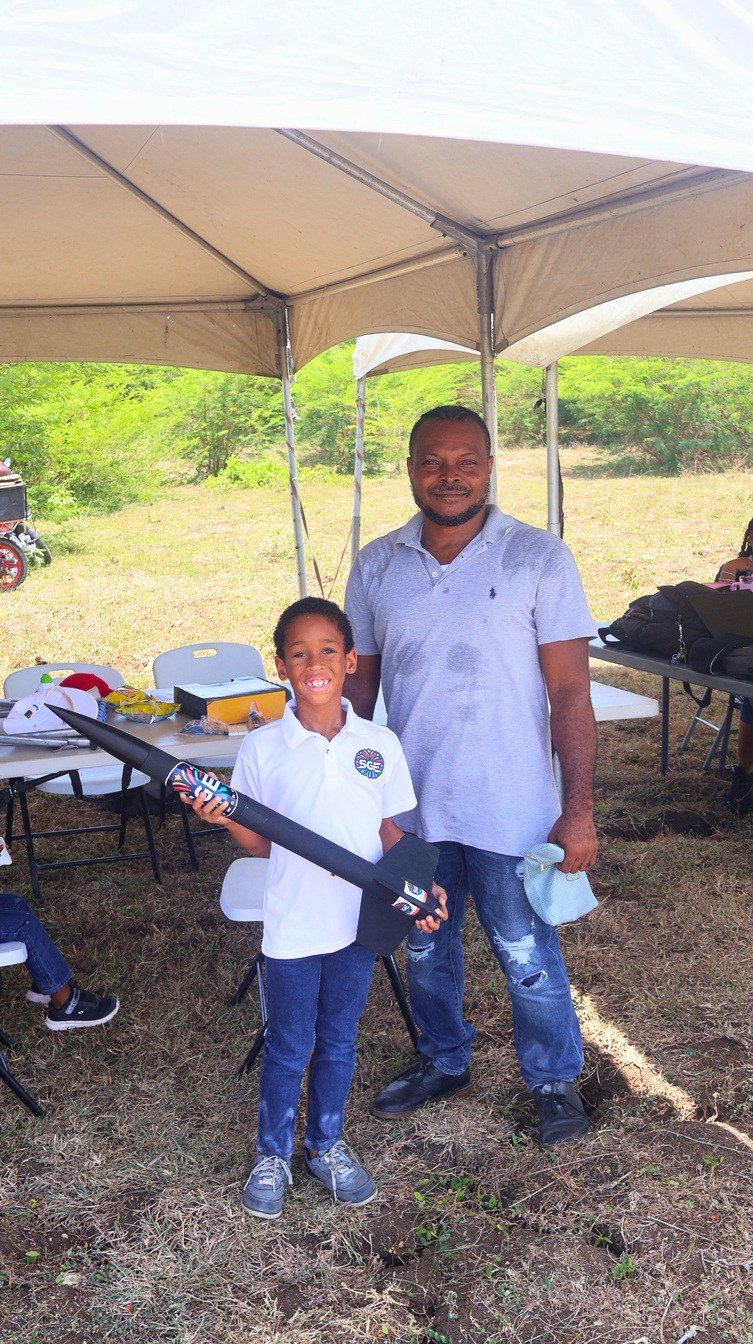
The very first rocket off the pad belonged to Team Sky Glow Entertainment: three generations of one family, from six-year-old Lev Gordon to his 77-year-old grandfather Norman Tyson. Their rocket climbed to roughly 247 m and was recovered successfully, and the day only built from there: launch after launch, recovery walks across the field, flight data pulled at the scoring table, and an awards ceremony that crowned an all-girls team national champions.
22 registered teams100+ participants6–77 ages on one team264 m the winning flight2027 we go again
Final Results
The Podium.
Every award at LNRC 2026 was presented by Sunshine Snacks, our Official Awards Sponsor.
1st · National Champions
Polar Gears
St. Andrew High School for Girls. An all-girls team of three whose rocket flew to 264 m and delivered the strongest overall performance of the day, taking the Mount Point Cup as overall champions AND the Apex Award for the peak altitude closest to 300 m. Their win came with the champion's gift basket and a J$50,000 prize from Sunshine Snacks.
2nd Place
Team Nah Sah
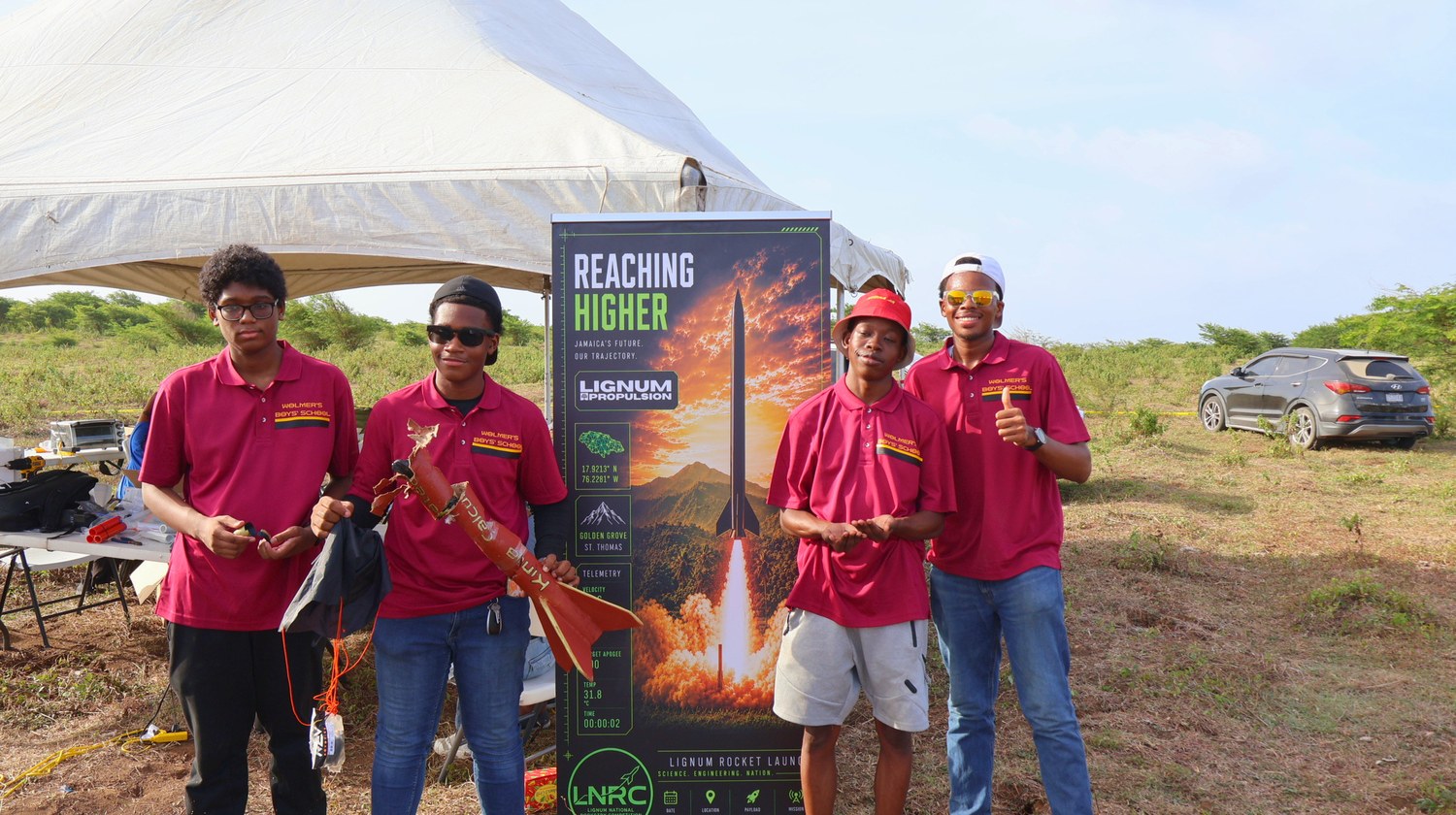
Wolmer's. A composed, consistent campaign across build quality, flight, and recovery, flown on a three-motor cluster, earned Wolmer's the second step on the first LNRC podium.
3rd Place
Sky Glow Entertainment
Three generations, ages 6 to 77, and the first launch in the competition's history. Lev Gordon (6), Nicolas Cardoza (39), and Norman Tyson (77) modified their kit through their own design process, flew to roughly 247 m, and recovered their rocket with its flight data intact.
To every team on the scoreboard and every team that flew: you were part of the first one. That is yours forever. More team photography is on the way and will be added here.
Field Photography · Golden Grove, St. Thomas
Launch Day.
IgnitionA Jamaican-made motor lights on the pad line
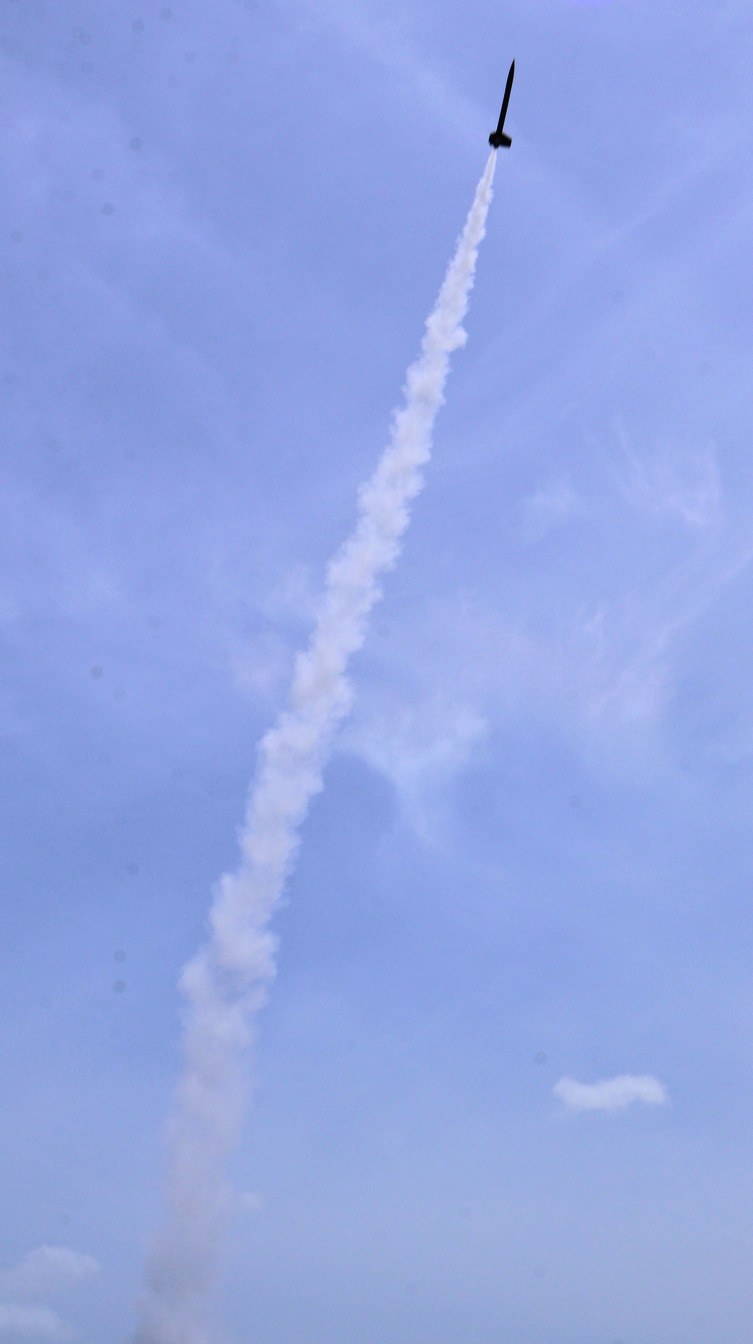
The TrailStraight up over Duckenfield Hall
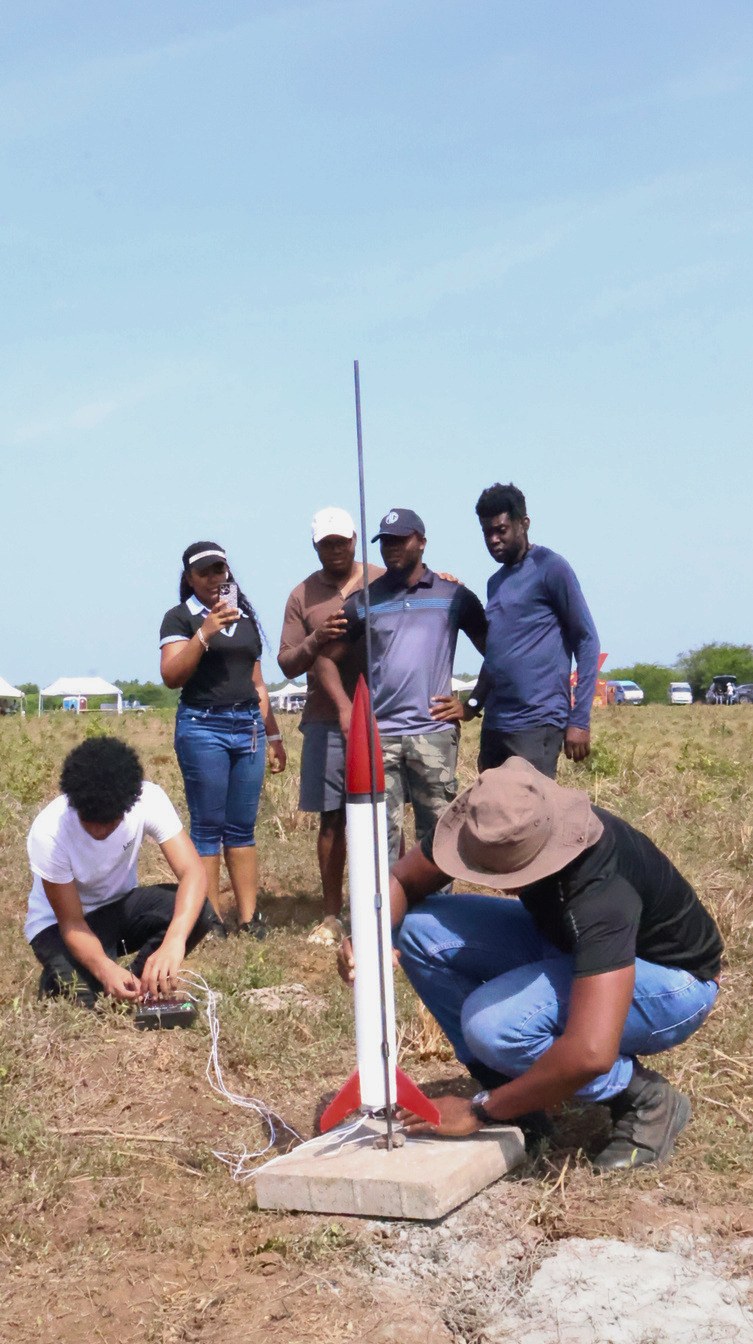
Pad CrewMotor fitted, igniter set, everyone back
Walk-outCarrying a rocket to the line
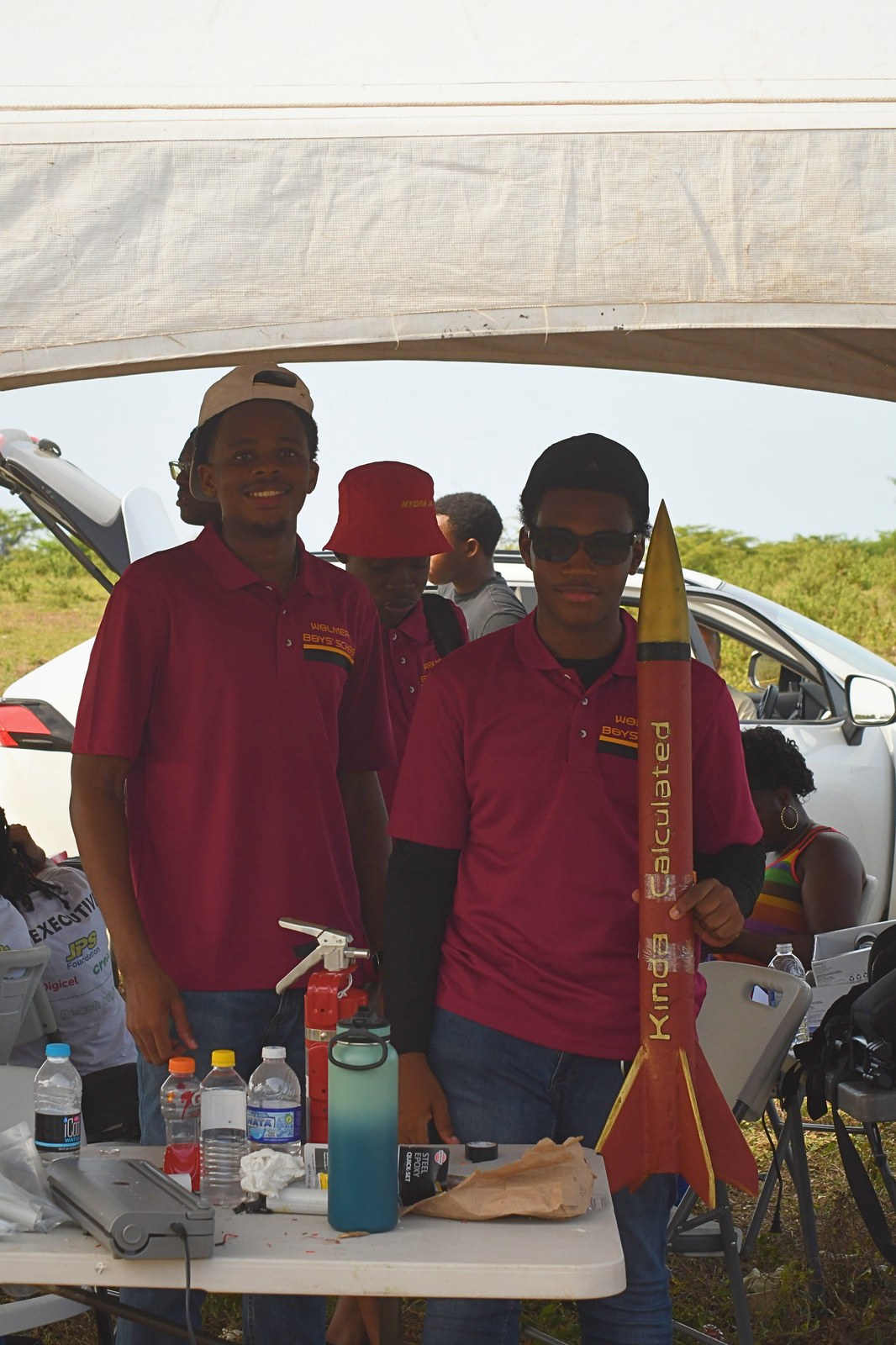
Team ColoursReady at the prep table
Sky GlowThree generations, one rocket
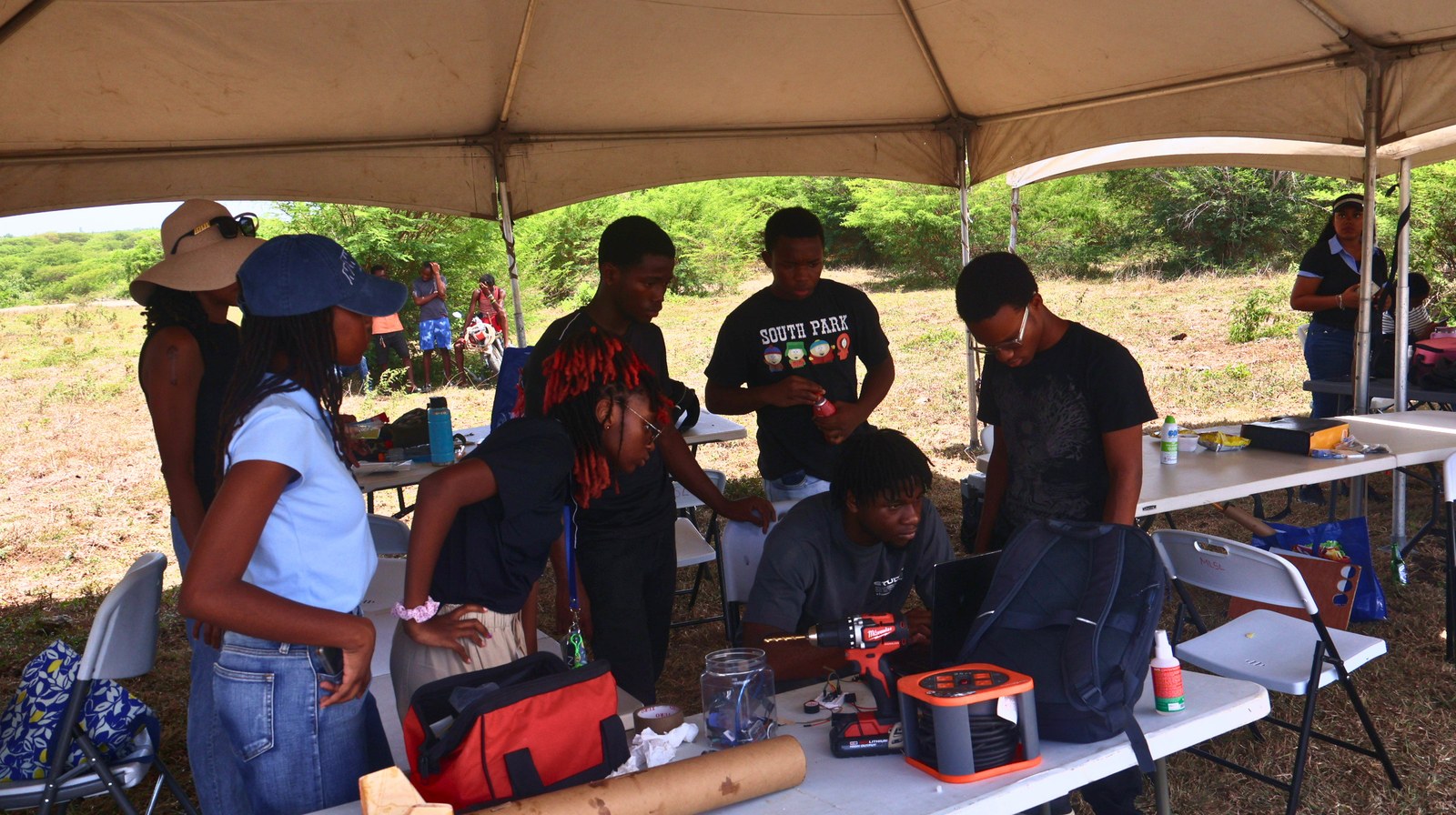
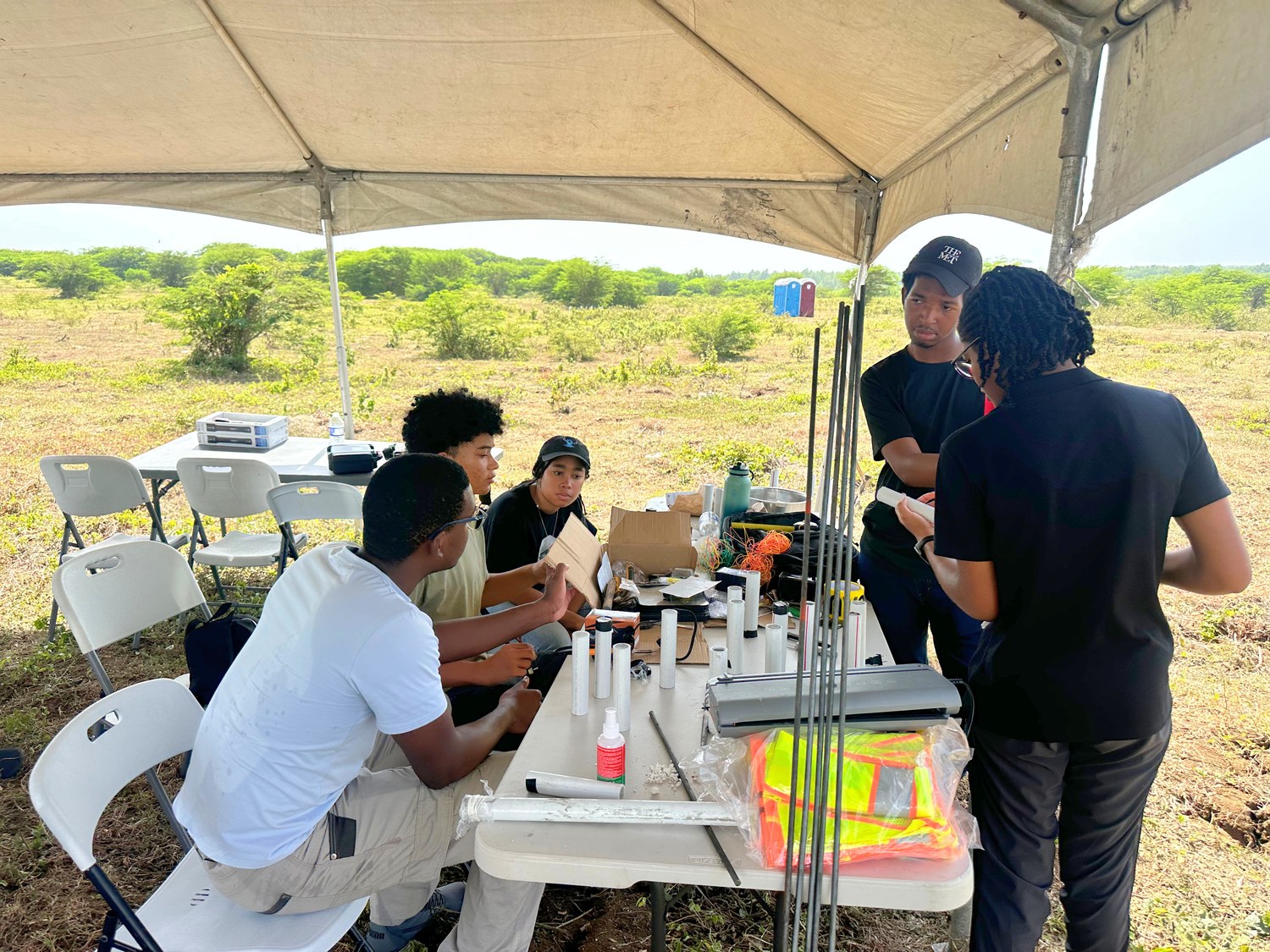
Pit WorkField repairs and final trims
The RangeOfficials, tents, and a hot line
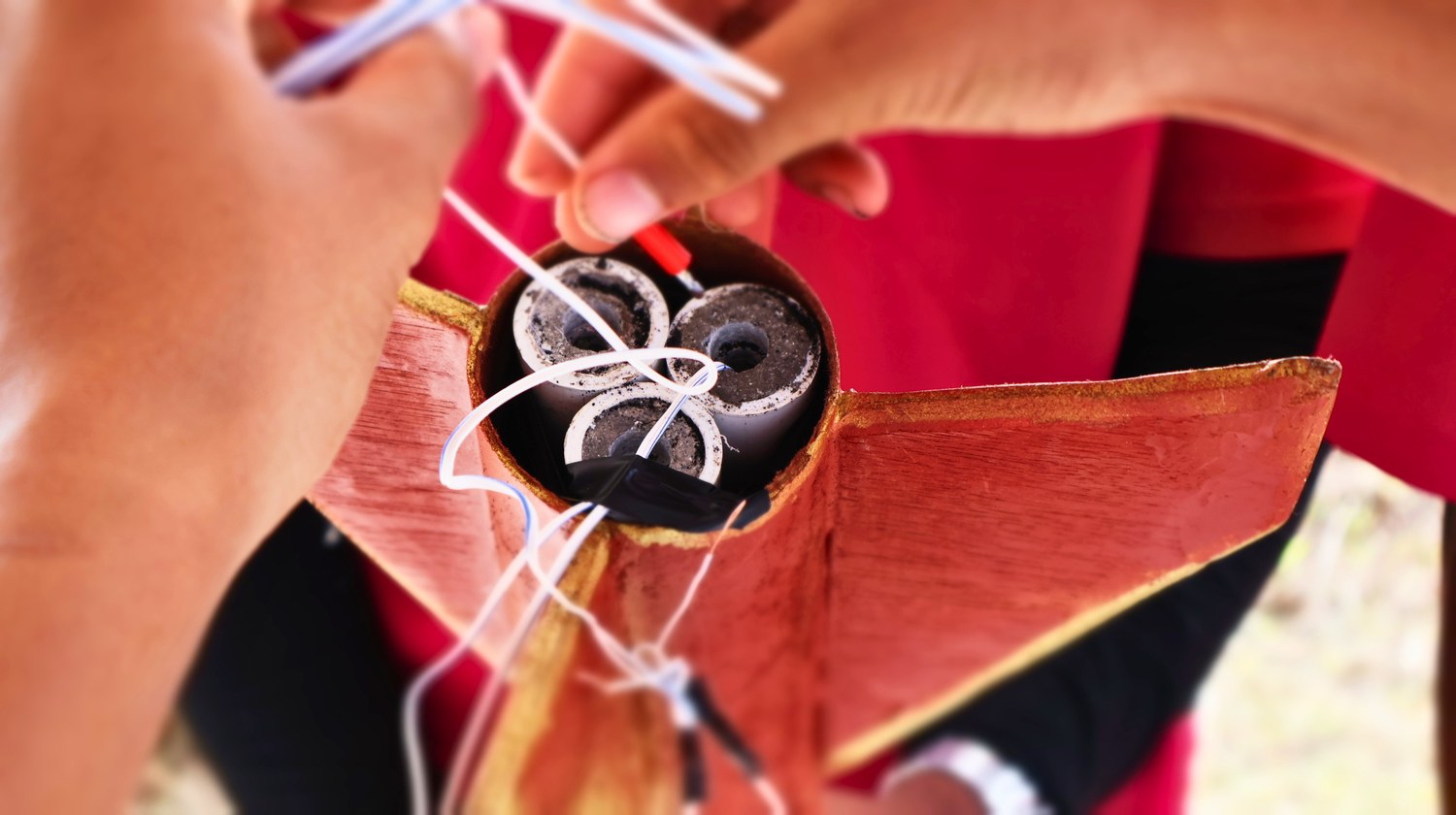
The ClusterWolmer's wires a three-motor cluster for the scored flight
The Walk BackWolmer's brings their rocket home after recovery
Hands OnCollecting a flown rocket for the data pull
Thank You
The Sponsors Who Made It Free.
Every kit, every motor, every award at LNRC 2026 reached teams at no cost because these organisations backed a first-of-its-kind idea. Thank you.
Official Electronics Sponsor
Official Awards Sponsor
To Digicel Foundation: thank you for believing in a national first and helping us put real hardware in the hands of Jamaican students. To the JPS Foundation, our Official Electronics Sponsor: every flight computer that flew on August 15, every altitude on the scoreboard, traces back to your support, and we are grateful. To Jamaica Producers: thank you for standing behind young Jamaican engineering. To Crocs: thank you for backing the teams from kit season all the way to the range. And to Sunshine Snacks, our Official Awards Sponsor: you presented every award of the day, including the J$50,000 champion's prize and gift baskets, braved the Duckenfield terrain, and ran an on-site activation that the teams will not forget. Thank you as well to Baymac Management Services and Ocean Palms, who showed up for the competitors on the ground when it mattered. Corporate Jamaica did not just sponsor a STEM event: you stood in a field in St. Thomas beside the young people you invested in, and it made all the difference.
To Everyone Who Built This Day
Thank You.
To every participant: you built real rockets with real engineering and flew them in front of the country. To the parents, teachers, and supporters who drove across parishes at dawn: your teams flew because you showed up. To our volunteers, inspectors, pad crew, recovery marshals, and scoring table: you ran a safe, professional range in serious heat, and every flight of the day came home. To Range Security Supervisor Al Stewart and the members of the Jamaica Defence Force who volunteered their expertise in their civilian capacities, to the Jamaica Civil Aviation Authority, the National Land Agency, and the Jamaica Fire Brigade: thank you for helping Jamaica do this safely, and for helping us lay a foundation that organised rocketry in Jamaica can now build on.
Teams came from schools including Jamaica College, Immaculate Conception High School, St. Andrew High School for Girls, and Wolmer's, alongside independent and community teams, with participants from six years old to seventy-seven. That is exactly the Jamaica we built this for.
What's Next
LNRC 2027.
The Lignum National Rocketry Competition is now an annual event. Season two flies in 2027: bigger, sharper, and open to new teams across Jamaica. Registration details will be announced here and on our socials. If your school wants a rocketry club, or your company wants to back season two, we want to hear from you now.
2026 Season Archive
LNRC 2026
Every rule, document, download, and technical resource from the inaugural season, kept exactly as teams used them. The competition flew at Golden Grove, St. Thomas on August 15, 2026.
Season one complete · Flown August 15, 2026
You are reading the 2026 season archive: the rules, documents, firmware, and downloads exactly as the 22 registered teams used them. Nothing here governs a live event any more. For the results, photos, and what comes next, head to the Competition page.
What Is LNRC?
Your Chance to Launch.
LNRC 2026 is the first time anyone in Jamaica has been able to design, build, and fly a real high-powered rocket as part of a national competition. Your team gets real flight computer electronics and a real rocket kit, and flies a real motor - issued at the pad on launch day. You will spend the build period building it, simulating it, and arguing about it. Then on August 15, you stand on the coast at Golden Grove, St. Thomas and watch it fly.
The mission: hit exactly 300 m, eject your flight computer at the top of the flight so it logs the descent, predict its landing coordinate to the metre, and recover a raw egg intact. Lowest score wins - because in real aerospace, precision matters more than power.
This is the kind of thing that ends up on a university application. It's also free.
Registration Is Now Closed
22 Teams. 99 Participants.
Registration for LNRC 2026 has closed at full capacity. Teams from schools and communities across Jamaica are now building for launch day, August 15, 2026.
Want to be part of it anyway? We need volunteers for launch day.
Teams from these schools and institutions, plus independent community teams:
Campion CollegeKingston CollegeWolmer's Boys' SchoolCalabar High SchoolUWI MonaSt. George's CollegeImmaculate Conception HighSt. Andrew High School for GirlsArdenne High SchoolSt. Jago High SchoolEdwin Allen High SchoolInnswood High SchoolMarymount High SchoolSt. Hilda's, Creative Kids Learning Academy, and Sky Glow Entertainment Diocesan High+ Independent Community Teams
Key Dates
Competition Timeline
May 16, 2026
Team Registration Opens (Now Closed at Capacity)
Registration ran via the LIGNUM website and has now closed at capacity (22 teams, 99 participants). Teams needed a minimum of 2 members, with no maximum team size, no student requirement, and no faculty advisor requirement. There is no registration fee. Registration closes when capacity is reached.
May 30, 2026
Q&A System Opens
The Rules Q&A system is open at lignumpropulsion.com/#qa. Moderators answer questions as soon as possible.
July 25, 2026
Kit Distribution & Orientation
Completed July 25 at Covenant City Church, Kingston 10. Registered teams received their competition kit, which includes an inert demo motor (mass simulator), two electrical ejection charges for recovery deployment, two raw eggs (one to practice with, one to fly), the body tube and matching ogive nose cone for the airframe class selected at registration (2-inch or 3-inch), the Arduino-based flight computer, sensors (BMP280/BME280, MPU-6050), launch lugs sized for the official launch rod, raw ripstop parachute fabric and shroud line (teams design and build their own parachutes), and all components needed to build the rocket and flight computer. Each team's allocation of 3 live LP-KNSB-34-165 motors stays in Lignum Propulsion's custody and is flown at official launch days and on competition day. Missed collection? Kits can be picked up at 5 Swallowfield Road, Kingston 5, Monday to Friday, 8:00 am to 4:00 pm - if pickup is difficult, delivery can be arranged: email lignumpropulsion@gmail.com.
August 15, 2026
Competition Day
Single-day event, 8:00 am to 5:00 pm. Gates open 8:00 - find your pre-labelled team tent. Inspections 8:15-9:30, ten-minute safety briefing 9:30, practice window 9:45-10:45 (one practice launch per team from its 3-motor allocation), then straight into scored flights with a 12:30-1:00 break. Awards 3:30 pm, pits cleared by 5:00. Full day schedule (PDF).
Field Report · July 25 · Covenant City Church, Kingston 10
The Kits Are Out.
Every registered team walked out of Covenant City Church with a Pathfinder kit and three weeks to turn it into a competition rocket. A full room, a complete walkthrough of the mission and the hardware, and a demonstration by Jamaica's National Robotics Team to send everyone off.
22 kits in team hands99 participants building3 weeks to launch dayAug 15 Golden Grove
The BriefingSimulation tips, scoring, and the mission - every team in the room
The Lignum TeamBuilt by students, for students
Kits Going HomeBody tubes over shoulders, three weeks on the clock
National Robotics Team ShowcaseJamaica's FIRST Global Challenge robot, live on stage
Competition Detail
Rules, Specs & Scoring
The full breakdown: airframe classes, motor specifications, recovery requirements, and the inverted scoring system used to determine the class champions.
Structure
Two Kit Sizes, One Competition
Teams chose between two kit sizes based on tube width. The 2-inch class rewards precision engineering in a compact form. The 3-inch class allows greater internal volume for payload integration and recovery packing. Both sizes compete together in one merged competition with a single champion: the trade-off between them is part of the game.
Propulsion
Standardised Motor
Every team uses the same Lignum Propulsion KNSB composite motor: LP-KNSB-34-165, a 33.4 mm x 165 mm F76-class motor delivering approximately 76 N average thrust over a 0.84 s burn (~64 Ns total impulse). Standardising the motor means the winner is determined by airframe design, mass management, and recovery strategy, not motor selection.
Airframe Design
Build to Specification
Be creative: you can build with almost any structurally sound material. Common choices are cardboard or phenolic body tube, fibreglass, PVC, plywood, balsa, and corrugated plastic (coroplast, an excellent fin material that comes in your kit). No approvals or notifications needed: if it meets the requirements, you can fly it. Every rocket passes the pre-launch safety inspection. The kit includes an ogive nose cone sized to the registered class; alternate nose cone geometries are freely allowed, no notification needed. Fin count and shape are free, provided fins are symmetrically spaced and securely bonded. Launch lugs (kit-supplied) are required and ride the official 3/8 in launch rod. Teams must simulate their rocket before competition day to verify altitude and stability.
Recovery
Two Parachutes Required
Two parachutes are mandatory: the rocket body and the flight computer each come down under their own parachute. "Separately deployed" means the flight computer descends as its own free unit: no cord or tether to the motor-bearing body, on its own parachute, and the separating unit must be well under half the rocket. A tethered flight computer scores as not deployed. No official deployment design is provided; designing the ejection mechanism is part of the challenge. Main parachute deployment and flight computer ejection are both controlled by the onboard flight computer. The motor has no ejection delay charge. Any component striking the ground without a deployed parachute is a safety violation and disqualifies the flight.
Flight Day
One Launch Per Team
Each team receives one official launch attempt on competition day. Teams are responsible for all pre-launch assembly and checklist completion. The Lead Rocket Inspector inspects every rocket before it is cleared to fly.
Judging
Inverted Scoring
LNRC uses an inverted scoring system - the lowest final score wins. Penalties are added for altitude deviation and landing-prediction error; bonuses are subtracted for egg survival and flight computer data quality. See the full scoring breakdown below.
Required: Flight Simulation
All teams must simulate their rocket before competition day. Simulation is a safety requirement, not optional. It tells you how high your rocket will fly so you can tune your design to hit the 300 m peak altitude target, and verifies that your rocket is stable before it leaves the rail.
We highly recommend OpenRocket, the free, open-source rocketry simulation tool used by student teams worldwide. Download it at openrocket.info. Model your exact rocket geometry, load the LP-KNSB-34-165 motor file, and run altitude and stability simulations before you finalise your airframe design. The official LP-KNSB-34-165.eng motor file for OpenRocket is available to download now from this website, so teams can simulate before kits arrive. Use this file for all simulations - it is the only authorised thrust curve for LNRC 2026.
Technical Specifications
Rocket Class Requirements
All teams must comply with the following minimum specifications.
Specification
2-Inch Class
3-Inch Class
Body Tube Inner Diameter
2.0 in (50.8 mm)
3.0 in (76.2 mm)
Maximum Overall Length
168 cm (~5.5 ft), rearmost point to nose tip; no minimum
168 cm (~5.5 ft), rearmost point to nose tip; no minimum
Motor Mount Inner Diameter
34 mm
34 mm
Launch Interface
Launch lug (kit-supplied), rides the official 3/8 in launch rod
Launch lug (kit-supplied), rides the official 3/8 in launch rod
Nose Cone
Ogive (kit-supplied); any alternate geometry allowed - no notice required
Ogive (kit-supplied); any alternate geometry allowed - no notice required
Fin Geometry
Any (symmetrically spaced, securely bonded)
Any (symmetrically spaced, securely bonded)
Parachutes
Two-parachute recovery (required)
Two-parachute recovery (required)
Airframe Material
Cardboard/phenolic, fibreglass, PVC, plywood, balsa, or corrugated plastic
Cardboard/phenolic, fibreglass, PVC, plywood, balsa, or corrugated plastic
Competition Motor
LP-KNSB-34-165 Standard Motor
Every team has an allocation of three motors, flown at official Lignum launch days and on competition day. Multi-stage and clustered configurations are permitted in both classes, with a maximum of 3 motors on the competition flight - see the July 2026 rules clarification below. Live motors and igniters remain in Lignum Propulsion's central custody at all times: they are never distributed with kits, shipped, or held by teams. Each kit instead includes one inert demo motor (mass simulator), painted safety orange and marked INERT - DEMO, for motor mount fit checks, CG and stability testing, swing tests, and pad practice. It is not flight capable and contains no propellant.
Parameter
Value
Designation
LP-KNSB-34-165
Propellant Type
KNSB (Potassium Nitrate / Sorbitol composite)
Casing Material
Rigid PVC (1" nominal, Sch 40)
Casing Outer Diameter
33.4 mm (1.315", nom. 1" PVC)
Casing Length
165 mm (16.5 cm)
Propellant Mass
~77 g
Average Thrust
~76 N
Burn Duration
~0.84 seconds
Total Impulse
~64 Ns
Motor Classification
F76 (NAR/Tripoli impulse class)
Peak Thrust
94 N
Average Chamber Pressure
225 psi
Peak Chamber Pressure
287 psi
Specific Impulse (Isp)
84.5 s
Casing Inner Diameter
26.6 mm (1.049")
Casing Wall Thickness
3.38 mm (0.133")
Total Loaded Mass
~172 g
Hardware Mass
~95 g
Grain Config
Single BATES segment, 25.4 mm OD × 115.9 mm, 12.7 mm core
Nozzle
Bentonite-epoxy composite plug, 5.56 mm throat, 11.1 mm exit
The motor has no ejection delay charge. All deployment events (main parachute, flight computer ejection) are triggered by the onboard flight computer.
OpenRocket Motor File
The official LP-KNSB-34-165.eng thrust curve file is available to download now, directly from this website - you do not need to wait for your competition kit to begin simulating. Load it into OpenRocket to model your exact rocket. Recommended simulation conditions for Golden Grove, St. Thomas: 30°C, 1013 mbar, sea level, easterly winds 3–5 m/s, launch angle 5°. Official launch rod: 3/8 in (9.5 mm) diameter, 6 ft (1.83 m). Set this as the launch rod length in your simulation and include your launch lugs in the model.
This is the only authorised motor file for LNRC 2026. Do not use generic F-class curves from other databases. In OpenRocket the motor appears as LPKNSB34165PVC, which is the correct file.
Official Nose Cone STL Files
The official tangent-ogive nose cone models for both airframe classes are available as 3D-printable STL files. These are the exact geometry of the 3D-printed nose cone supplied in your competition kit (223 g for 3-inch, about 119 g for 2-inch, sanded and painted) (each kit includes the cone matching the team's registered airframe class; the cone's bulkhead is the same epoxy-bentonite material used in the motor). Use the files to print spares in PLA or study the shape in your simulations. We recommend sanding the nose cone shoulder and the tube mouth until the fit is snug and smooth. The concrete cone is heavier than a printed one - weigh yours and enter the real mass in your simulation. Note: the shoulder section is deliberately just under the body tube's INNER diameter so it slides into the bore, while the base matches the tube's outer diameter and sits flush on the rim (sand lightly on assembly if proud); this is correct, not a print error.
2-inch: base OD 54.1 mm (equals the tube outer diameter, sits flush on the rim), shoulder OD 50.3 mm, 200 mm ogive. 3-inch: base OD 80.26 mm, shoulder OD 75.7 mm, 230 mm ogive. Alternate nose cone geometries are freely allowed; anything you fly just has to pass the pre-launch safety inspection.
Launch lug STL is also available: launch lug, 2 required per rocket, included in kits; STL provided for spares. Each lug rides the official 3/8 in (9.5 mm) launch rod.
Official flight computer flight code is also available: picosat_flight.ino logs altitude, temperature, pressure, and IMU data at 25 Hz, detects peak altitude, and drives your deployment circuit. Wiring tables and setup are in the Build Guide.
EEPROM logging firmware (no SD card) - three official alternatives that log to the Nano's internal memory instead of the SD card. All work with both kit sensors (BMP280 or BME280, auto-detected):
picosat_liftoff8.ino - recommended for flights. Arms after startup and waits using no memory; recording begins only when the rocket rises above 8 m. Stops at landing and sounds a continuous recovery siren. Fires the ejection output (pin D9) at the top of the flight for your ejection charge circuit.
picosat_liftoff3.ino - identical, but the liftoff trigger is 3 m (also fires the D9 ejection output). More sensitive: strong gusts or handling can false-trigger it.
picosat_timed.ino - no liftoff trigger. Starts recording the moment it is powered (D9 ejection output included) and runs until memory is full. Best for bench testing and demos; on a flight, time spent waiting on the pad consumes recording time.
Learn OpenRocket
Video Tutorials
New to flight simulation? These tutorials take you from a blank OpenRocket window to a fully simulated rocket. Watch them, then load the official LP-KNSB-34-165 motor file above and model your own design. The official written tutorials at openrocket.info/tutorials are also worth reading.
Full Rocket Build, Start to LaunchA complete cardboard-tube rocket built and flown on camera: fins, glue, parachute, launch day. Your kit build follows the same steps.
Beginner Guide, In Depth
A full walkthrough of OpenRocket for first-time users: the interface, adding components, and understanding what the numbers mean. Start here.
Beginner Guide, In Depth
A full walkthrough of OpenRocket for first-time users: the interface, adding components, and understanding what the numbers mean. Start here.
Basic Rocket Design
A quick introduction to the Rocket Design tab: body tubes, nose cones, fins, and how a basic airframe comes together.
Designing a Complete Rocket
A start-to-finish design of a full rocket, including motor selection, stability margin, and running the flight simulation.
Build Your Parachute
Your kit includes two precut ripstop nylon squares (24 x 24 in and 16 x 16 in) and 30 feet of 1.5 mm shroud line. Parachute design is up to your team: any shape or size that meets the recovery rules. The Kit Contents document has a proven example design, and this tutorial shows the technique for cutting and assembling a ripstop nylon parachute.
Making a Ripstop Nylon Parachute
A simple, proven method for cutting a ripstop nylon canopy and attaching shroud lines. The same technique works at any size you choose for your design.
These videos are independent community tutorials, not produced by Lignum Propulsion. General techniques apply; always follow the LNRC 2026 Game Manual where they differ.
Published Clarification
Major Update: Simpler Rules, One Competition (August 2026)
Teams told us the documents were too complicated, so we fixed them. The Game Manual has been rewritten in plain language (Revision 2), the Build Guide is fully illustrated (Version 3), and every document now uses one name for each thing. Scoring point values are unchanged. What changed:
One competition. The 2-inch and 3-inch sizes now compete together. One leaderboard, one champion.
One name. The electronics package is called the flight computer everywhere. Older documents said PicoSat, avionics bay, or atmospheric laboratory: all the same thing, one name now.
Modification freedom. Cut, drill, sand, shorten, thin, and shape your rocket freely, metal parts included. The only hard limits: keep your tube size, stay under 168 cm, two parachutes, pass the safety inspection.
Parachutes from any material. Kit nylon, plastic sheeting, umbrella fabric: if it opens and slows the rocket, it is legal.
Nose cones unlimited. Use any nose cone, make as many as you want, ballast allowed.
Average part masses published in the Game Manual (Section 13) for your simulations, including measured values: flight computer electronics 55.5 g, 3-inch nose cone 223 g, 2-inch about 119 g.
EEPROM code recommended, and it now fires the ejection output (pin D9) at the top of the flight.
Free parts and help. IRLZ44N MOSFET, resistors, extra ejection charges, fireproof wadding, a shared LiPo battery pack, and common spares: free from 5 Swallowfield Road, Kingston 5 (weekdays 8-4) and at the spares table on competition day. Staff will help every team all day: launch lug installation, ejection circuit setup, any modification. Bottled water will be available on site.
Ejection charges after inspection. Charges may be connected any time after your rocket passes the morning inspection (previously pad-only). Treat a connected charge as live.
Something still confusing? Use the documentation feedback form on the Q&A page: if a document confused you, that is our bug, not yours, and we will fix the document.
Following a team question through the Q&A, the following clarification applies to both classes. It is incorporated into the Game Manual.
Motors. Multi-stage and clustered configurations are permitted. All motors are LP-KNSB-34-165 units, and a maximum of 3 motors may be flown on the competition flight, in any configuration (single, staged, or clustered). Additional practice motors may be requested through the Additional Parts Catalogue. Live motors and igniters remain in Lignum Propulsion's custody at all times and are issued only at official launch days and on competition day - teams never hold live motors or igniters, including for air-start circuits.
Ejection charges. Each kit includes 2 electrical ejection charges, held by the team. Additional charges are purchasable through the Additional Parts Catalogue, and there is no limit on the number used per flight. All deployment wiring is subject to safety inspection.
Altitude scoring. The scored peak altitude is the peak altitude reached by the flight computer, taken from the flight computer's own logged barometric data. The flight computer must be powered and logging continuously from pad power-on through landing. The Data Bonus and Graph Bonus are judged on the descent segment, from the peak of the flight to landing. Other stages and sections carry no altitude requirement.
Landing prediction. The Predicted Landing Coordinate and accuracy penalty apply only to the flight computer. No landing prediction is required for boosters or other sections.
Recovery. Booster stages and any other separated components must descend under their own deployed recovery device (parachute or streamer). Each such component that lands without one incurs a +1,000 point penalty. The main rocket body and the flight computer remain governed by the Game Manual recovery rules as written. The Range Safety Officer retains final authority and may disqualify any flight on safety grounds.
Everything else is unchanged: maximum overall length 168 cm (no minimum), minimum 1.0 calibre stability in every flight configuration, 34 mm motor mounts, motor retention, and full inspection authority over the complete stack.
Kits were supplied with a mixed batch of sensors. This clarification applies to every team in both classes and is incorporated into the Game Manual.
Your sensor. Kits contain either a BMP280 or a BME280, depending on which arrived in the supplier batch. The two chips are pin-compatible, wire up identically, and measure barometric pressure and temperature the same way. The only difference is that the BME280 also carries a humidity sensor and the BMP280 does not.
Updated firmware. The official picosat_flight.ino on this site now supports both sensors. It identifies the chip automatically at startup and works at either I2C address (0x76 or 0x77). Download it from the Technology section and re-flash your flight computer.
Humidity is removed. Humidity is no longer logged and is no longer part of the flight computer Data Bonus or Graph Bonus bonus definitions. It has been removed from the SD card log format entirely, including the header row. The scored data streams are altitude, temperature and barometric pressure.
No team is advantaged or disadvantaged. Every team logs the same three data streams in the same format, whichever chip is in the kit. Teams that already wrote their own BMP280 fix should still switch to the official firmware so their log format matches what the judges score.
Everything else is unchanged: point values, the 25 Hz logging rate, peak altitude detection, the deployment circuit logic, wiring, and every other rule in the Game Manual.
flight computer Logging
The Official Flight Code (EEPROM: No SD Card Needed)
An additional official way to log your flight. SD card logging remains fully allowed and is scored identically - this is an option, not a replacement. It is now the RECOMMENDED official flight code for every team. It also fires the ejection output: pin D9 switches on for 1.5 seconds at the top of the flight, which triggers your ejection charge circuit. The IRLZ44N MOSFET and both resistors for that circuit are FREE: collect from 5 Swallowfield Road, Kingston 5 (weekdays 8-4) or the spares table on competition day. SD-card logging remains fully supported and is scored identically. The Build Guide (Section 8.4) has the full plug-in-and-upload walkthrough, including the port and bootloader settings for the kit's clone Nanos.
What it is. Three official firmware versions log altitude, temperature, and pressure at 1 sample per second for up to 5 minutes 38 seconds (338 samples) to the Arduino Nano's built-in EEPROM. The data survives power-off. Every version auto-detects your sensor - BMP280 or BME280, at address 0x76 or 0x77 - so they work with every kit.
Liftoff-triggered vs power-up. The two liftoff versions (picosat_liftoff8, recommended, and the more sensitive picosat_liftoff3) arm after startup and wait without using any memory: recording starts only when the rocket actually lifts off, so pad delays cost you nothing - that is why they are the versions to fly. The timed version (picosat_timed) has no trigger at all: it records from the moment it is powered until memory is full - the simplest possible operation and the best choice for bench tests and demos, but on a flight every second on the pad eats into your 5:38 of recording.
Why use it. It removes the SD module, the SD card, and 4 jumper wires: lower mass, simpler wiring, fewer failure points. The liftoff versions also sound a continuous siren after landing to help you find the flight computer. Required libraries: Adafruit BME280 and Adafruit BMP280 (install both in the Library Manager).
Getting your data. Plug the Nano into a laptop over USB, open the Arduino Serial Monitor at 9600 baud, and press reset: the stored flight prints as a CSV block. Copy it into a file, save as .csv, and open it in any spreadsheet.
Scoring: the EEPROM option satisfies the flight computer data requirements (altitude, temperature, pressure) exactly like SD logging. The Game Manual already accepts any non-volatile storage. Nothing about scoring changes.
Judging Criteria
Inverted Scoring System
The lowest final score wins. Final Score = (Altitude Penalty + Accuracy Penalty) - (Bonuses Earned). Bonuses are large, so a well-executed flight produces a strongly negative score.
Altitude Tiers (Peak altitude Target: 300 m)
Tier
Altitude Range
Score Effect
Perfect Tier
290 m to 310 m
-1,000 points (maximum bonus)
High Tier
250-289 m or 311-350 m
-500 points
Mid Tier
200-249 m or 351-400 m
-300 points
Baseline
100-199 m or 401+ m
-100 points
Below the tiers
Below 100 m or no usable recording
0 points (no bonus)
Landing Accuracy Penalty
Before launch each team submits its predicted landing sector on the official site sector map (released before competition day); the centre of that sector is the team's Predicted Landing Coordinate (PLC). Land inside your predicted sector: zero accuracy penalty. Land outside it, and the penalty is:
Accuracy Penalty = D x 10(D = metres between PLC and actual flight computer landing)
Example: 10 m off target = 100 penalty points. 25 m off = 250 penalty points. 50 m off = 500 penalty points.
Payload Bonuses (subtracted from score)
-500 pts
Egg Bonus
Raw egg payload recovered with no cracks or leaks visible to the naked eye on inspection by a flight official.
-500 pts
Data Bonus
Complete, clean dataset (altitude, temperature, pressure) covering the full descent from the peak of the flight to landing.
-200 pts
Graph Bonus
Well-labelled, clearly presented graphs of all three sensor streams - altitude, temperature and pressure - submitted at the post-flight data window. Up to -200 pts.
$0
Entry Fee
There is no registration fee. Participation is free for all eligible teams. Register at lignumpropulsion.com.
Official Documents
Download the Rules
All three documents are authoritative for LNRC 2026. Teams should read the Game Manual in full. The Rules Summary and Kit Contents documents are companion references.
Document 01
LNRC 2026 Game Manual
The full, authoritative rulebook for the Lignum National Rocketry Competition. Covers eligibility, technical requirements, scoring, safety, and event procedures.
Price list (JMD) for replacement and additional parts beyond the kit - sensors, batteries, body tubes, nose cones, motors, and custom 3D-printed parts.
How safety is managed at every Lignum event: RSO authority, motor and igniter custody, launch day procedures, range layout, weather limits, and workshop safety. Applies to everyone on site.
Optional step-by-step guide to a working base rocket that you are meant to alter: kit checklist, tools you supply, the full build sequence with diagrams and time estimates, flight computer wiring, ejection charge code, stability checking with the demo motor, and a competition day checklist. It deliberately leaves flight computer deployment to you.
Help us run the event - engineers, educators, photographers, and event-day support all welcome.
Research and Development
Our Technology
Pioneering sustainable rocket propulsion from Jamaican biomass.
Propulsion Research
Coconut Husk Hybrid Propellant
Our primary research focuses on a novel hybrid rocket propellant derived from pyrolised coconut husk, a renewable agricultural waste material abundant across the Caribbean. The fuel grain is paired with a manganese-guanine catalyst and hydrogen peroxide (H₂O₂, 85–90%) as a clean oxidiser, producing a propellant that is renewable, non-toxic, and locally manufacturable.
When ignited, the hydrogen peroxide decomposes into water and oxygen, eliminating the chlorine and nitrogen-based pollutants that conventional propellants release directly into the stratosphere. This makes our system one of the cleanest hybrid propellant configurations currently under active investigation.
Why This Matters
Renewable. Local. Accountable.
Conventional rocket propellants (RP-1, hydrazine, ammonium perchlorate composites) release carbon dioxide, soot, and nitrogen oxides into the stratosphere, where recovery takes decades. Research shows a 1% rise in global rocket launches increases greenhouse gas emissions by 1.13%.
Approximately 20 million tons of coconut waste is produced annually worldwide, most of it discarded or burned. By pyrolising this waste, we produce a carbon-rich fuel grain suited for hybrid combustion, turning an agricultural byproduct into aerospace technology and using Jamaica as the proving ground.
Active Research
The Science Behind It
Our formal research investigates both the combustion performance and the full environmental impact of the coconut husk / Mn-Gu + H₂O₂ propellant system in an active subscale hybrid motor. This fills a genuine gap, as no prior study has experimentally validated this propellant combination with a life cycle environmental assessment.
Key targets include achieving a Specific Impulse ≥ 80% of the HTPB/N₂O baseline, combustion efficiency ≥ 70%, and a Weighted Emission Index at least 40% lower than conventional propellants, while keeping fuel synthesis cost at or below USD 20/kg.
Static fire testing of the coconut husk fuel grain in a subscale hybrid motor to validate combustion performance, regression rate, and emissions data against baseline propellants.
2
Full Scale Launch, September 2026
A full scale rocket powered by the coconut husk biofuel propellant, representing the first flight of a biomass-derived hybrid motor developed and launched in Jamaica.
The People Who Built the Day
Thank You, Volunteers
LNRC 2026 ran on volunteers: the range crew, inspectors, recovery marshals, timers, the registration desk, first aid, and the media team. This page is for you.
August 15, 2026 · Duckenfield Hall
You Ran the Range.
Every launch that left the pad on August 15 left because a volunteer checked it, carried it, timed it, tracked it, or walked out into the bush to bring it home. You inspected 22 teams' rockets in the morning heat. You kept a hot range safe with families watching. You pulled flight data, escorted recoveries, staffed the gate, patched scrapes, poured water, and packed the field down to the last piece of igniter wire after the crowd went home. A first-of-its-kind national event ran safely from start to finish, and that record belongs to you.
Special thanks to Range Security Supervisor Al Stewart, to the members of the Jamaica Defence Force who volunteered their expertise in their civilian capacities, and to every inspector, marshal, spotter, and crew member who gave their Saturday to 100+ young Jamaicans. The Lignum National Rocketry Competition returns in 2027, and we would be honoured to have every one of you back on the line.
LNRC 2026
Team Registration
Registration Is Closed
Team registration for LNRC 2026 closed at full capacity: 22 teams and 99 participants are confirmed. If you registered and need to update your team's details, email lignumpropulsion@gmail.com. Everyone else: we would love to have you on the range crew - volunteer for launch day.
What happens after you register? Once confirmed, you will receive your competition kit on July 25, 2026, containing an inert demo motor (mass simulator), two electrical ejection charges for recovery deployment, two raw eggs, the airframe and matching ogive nose cone for the class you selected at registration, launch lugs sized for the official launch rod, ripstop parachute fabric and shroud line to design and build your own parachutes, and the full flight computer set (Arduino, BMP280/BME280, MPU-6050, SD logger, buzzer, breadboard; 9V battery not included). Build according to the rules and show up on Competition Day, August 15, 2026. Have questions? The Rules Q&A system is open now .
Before you compete: every participant (and a parent or guardian for anyone under 18) must sign a Participant Agreement & Liability Waiver before taking part in any build, test, or launch. The updated agreement is being finalised and will be issued to every registered team shortly.
LNRC 2026
Rules Q&A Submission
Have a question about the competition rules? Anyone can submit, including teams, educators, or interested participants. The Q&A system opens May 30, 2026.
Before submitting: Please read the full LNRC 2026 Game Manual carefully. Many common questions are already answered there. Reference the specific section number in your question, as this helps us respond accurately and quickly.
Q&A Guidelines
Anyone may submit a question - teams, educators, mentors, or interested participants.
Include the relevant rule or section number whenever possible.
One question per submission. Submit separate forms for separate questions.
Responses are sent to the email address provided. Official clarifications may be published for all teams.
The Q&A system is open at lignumpropulsion.com/#qa. Moderators answer questions as soon as possible.
Responses in the Q&A do not supersede the Game Manual, but every effort is made to maintain consistency across all rules.
Documentation Feedback
Found the Game Manual, Build Guide, or anything else confusing? Tell us here. If a document confused you, that is a problem with the document, and we will fix it.
Legal
Privacy Policy
Last updated: July 2026
Lignum Propulsion is a non-profit organisation based in Jamaica. This policy explains what personal information we collect through this website and how we use it.
What We Collect
When you submit a form on this site (team registration, the rules Q&A, or the volunteer application), we collect the information you enter: names, contact details, school or organisation, age where asked, and the content of your message. We do not collect payment information through this website, and we do not use tracking or advertising cookies.
How We Use It
We use this information only to organise and run Lignum Propulsion activities: confirming registrations, distributing kits, answering questions, coordinating volunteers, communicating event logistics, and supporting safety (for example emergency contact details). We do not sell personal information, and we do not share it with third parties except where needed to run the event or where the law requires.
Where It Lives
Form submissions are processed by Netlify, our website host, and delivered to us. This site also loads fonts from Google Fonts and embeds videos from YouTube; when you play an embedded video, YouTube's own privacy policy applies. We take reasonable steps to keep the information we hold secure and to keep it no longer than needed.
Minors
Many LNRC participants are under 18. Information about minors is collected only for event participation, with parent or guardian consent gathered through the Participant Agreement, and is handled with additional care.
Your Choices
To see, correct, or delete the information we hold about you or your team, email lignumpropulsion@gmail.com and we will action it promptly.
Legal
Terms of Use
Last updated: July 2026
By using this website you agree to these terms. Lignum Propulsion is a non-profit organisation based in Jamaica.
Use of This Site and Its Documents
The content on this site, including the Game Manual, Rules Summary, Kit Contents, Additional Parts Catalogue, Safety Policy, motor files, and 3D model files, is provided for LNRC participants and the public for information and educational use. You may download and print these materials for participation in Lignum Propulsion activities. You may not present them as your own or use them commercially without our written permission.
No Warranty
This site and its downloads are provided "as is". While we work to keep everything accurate and current, we make no warranty that the content is error-free. Simulation files and specifications are engineering references, not guarantees of performance. Where documents conflict, the current LNRC 2026 Game Manual is authoritative.
Rocketry Is Regulated and Dangerous
Nothing on this site is an instruction to build or fly rocket motors or other energetic devices. Live motors and igniters used in LNRC remain in Lignum Propulsion's custody and are flown only at official supervised events. Participation in Lignum Propulsion activities is governed by the Game Manual, the Safety Policy, and the Participant Agreement & Liability Waiver issued to registered teams.
Limitation of Liability
To the fullest extent permitted by the laws of Jamaica, Lignum Propulsion is not liable for any loss arising from your use of this website or reliance on its content. These terms are governed by the laws of Jamaica.
Registration for LNRC 2026 has closed at full capacity (22 teams). The steps below are kept for reference for registered teams.
1
Form Your Team
Assemble a team of at least 2 members. There is no maximum team size, no student requirement, and no faculty advisor requirement.
2
Choose Your Class
Decide whether your team will compete in the 2-inch or 3-inch airframe class. Review the technical specifications on the Competition page before committing. Your kit is built for the class you select: it includes only that class's body tube and matching nose cone.
3
Registration (Now Closed)
Registration opened May 16, 2026 and closed once the 22-team capacity was reached. There was no registration fee.